Fortnite opens its doors to Unity-backed games, reshaping the metaverse with a shared sandbox where creators collide and compete.
In addition to this, Unity’s cross-platform commerce platform will receive Unreal Engine support, giving developers more options for managing their digital catalogs and payment providers across PC, mobile, and web.
Epic Teams Up With Unreal Engine Rival to Bring More Games to Fortnite
Epic Games strikes a deal with Unity to integrate its games into Fortnite, expanding the battle royale’s ecosystem beyond Unreal Engine titles. This partnership allows Unity developers to publish experiences directly on Fortnite’s platform, drawing in fresh content like custom maps and modes. Players gain access to a broader library, while both companies aim to grow their presence in the metaverse space through shared tools and distribution.
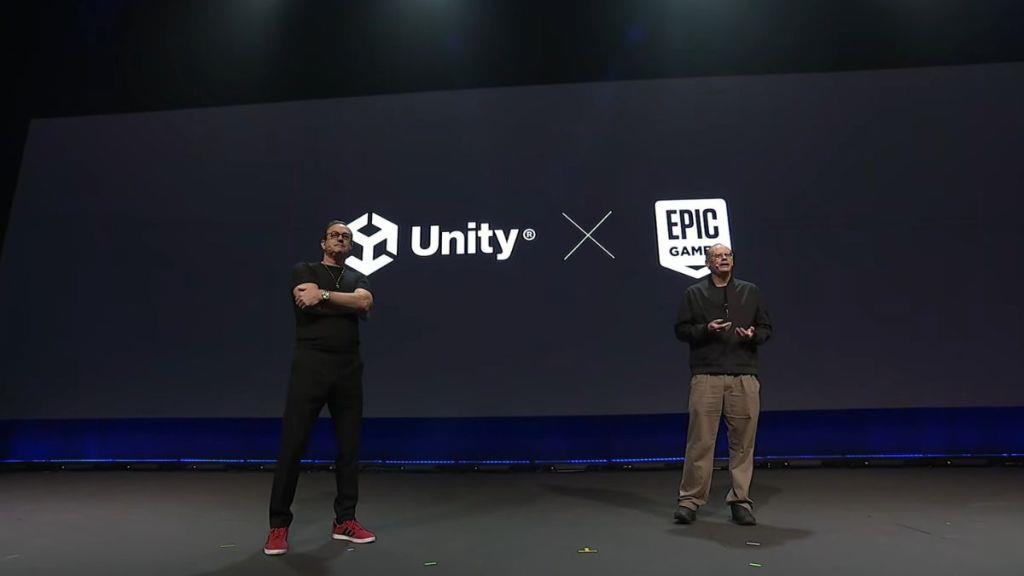
While it’s obvious Epic’s signature product is Fortnite, the company is also responsible for the toolkit that a majority of games are built using: Unreal Engine. And when it comes to third-party game engines, Unreal’s sole rival is Unity, which continues to be favored by small-sized studios and solo indie developers.
By way of this deal, Epic is bridging the gap and ensuring that new creations end up filtering into Fortnite. When combined with the central battle royale offering, the racing and Minecraft-inspired add-ons, and the thousands of Islands that are created using UEFN, Fortnite’s metamorphosis into a thriving metaverse becomes closer to fruition.
Epic CEO, Tim Sweeney, said as much while commenting on the move: “Just like the early days of the web, we believe that companies need to work together in order to build the open metaverse in a way that’s interoperable and fair. Working alongside Unity, we’re helping developers build fun games, reach bigger audiences, and find success.”
What does the Unity Fortnite partnership mean for indie devs
The Unity-Fortnite partnership offers indie developers unprecedented access to Epic’s massive platform, allowing them to publish Unity-built games directly into Fortnite’s ecosystem starting in 2026. This bypasses traditional discoverability hurdles on platforms like Steam, instantly exposing small studios to over 500 million registered Fortnite accounts and the lucrative Creator Economy.
Core Benefits
-
Massive Audience Reach: Indies gain “instant visibility” to millions of daily active players accustomed to exploring user-generated islands, reviving stalled prototypes or enabling quick repurposing of existing Unity assets.
-
Monetization Opportunities: Tap into Fortnite’s engagement-based payouts (e.g., $350M+ paid to creators in 2024), item sales with high revenue shares (74% through 2026), and unified commerce tools without switching engines.
-
Tool Flexibility: Stick to familiar C#/Unity workflows while accessing Unreal-compatible backend services for live-ops, pricing, and cross-platform distribution.
Potential Challenges
Indies face stiffer competition in Fortnite’s expanding catalog, requiring focus on player retention metrics like session length over one-off appeal. Adaptation to Fortnite’s discovery and payout systems may involve a learning curve, though no UEFN expertise is needed. Overall, this levels the playing field, ending “engine wars” and fostering an open metaverse for smaller teams.
What does the Unity Fortnite partnership mean for indie devs
The Unity-Fortnite partnership empowers indie developers by granting direct access to Fortnite’s vast player base and creator economy, allowing them to publish Unity-built games as standalone experiences within the platform starting in 2026. This eliminates traditional discoverability barriers on stores like Steam, enabling small teams to repurpose existing assets and reach over 500 million registered accounts without learning new engines.
Key Advantages
-
Audience Exposure: Indies gain instant visibility to millions of daily players exploring user-generated content, potentially reviving stalled prototypes or mobile titles for Fortnite’s engaged community.
-
Revenue Streams: Participation in Fortnite’s Creator Economy offers engagement-based payouts (over $350M distributed in 2024) and 74% revenue share on item sales through 2026, plus Unity’s commerce tools for live-ops.
-
Workflow Continuity: Developers retain familiar C#/Unity tools while leveraging Epic’s backend for cross-platform distribution, fostering an “open metaverse” without engine lock-in.
Drawbacks to Consider
Increased competition in Fortnite’s growing catalog demands strong retention strategies, as payouts favor sustained playtime over one-off visits. While no UEFN skills are required, adapting to Epic’s discovery algorithms and metrics may still pose a learning curve for newcomers.