Think your quick Fortnite edit seals the win? That simple button press might hand victory to opponents instead.
The player community largely embraced the feature, with players applauding its simplicity and speed, especially since Epic eliminated the initial edit delay. Players also highlight its ability to close the skill gap, inviting Zero Build gamers to attempt Build Mode.
However, some experienced builders complain about its restricted editing possibilities compared to traditional controls, preferring the precision of manual editing in ranked matches. So here are 5 reasons why you shouldn’t be using the Simple Edit option in Fortnite if you plan to go pro.
1. Accidental Edits Under Pressure
Panic during heated fights often leads players to make accidental edits they never intended. A single misplaced edit, like opening a door in the wrong wall or exposing a weak angle, can instantly give enemies a clear shot. Under pressure, muscle memory takes over, and rushed inputs can ruin solid builds that were meant for cover. These slips rarely go unnoticed in fast duels, where one mistake is enough to lose control of the fight.
Imagine you’re in a squad match, turtling in a 1×1 box while being shot at by many enemies. You try to edit a window to peek and fire, but your cursor becomes slightly misaligned, and Simple Edit opens a full wall instead. An opponent sprays your box with an SMG, killing you instantly.
This accidental edit undermines your defensive system, resulting in a swift elimination and a failed clutch for your squad. Thus, Simple Edit’s single-tap functionality raises the possibility of such accidents, particularly in chaotic scenarios when exact cursor placement is impossible. This can cause your builds to open up in a way you don’t want and jeopardize your entire squad in seconds.
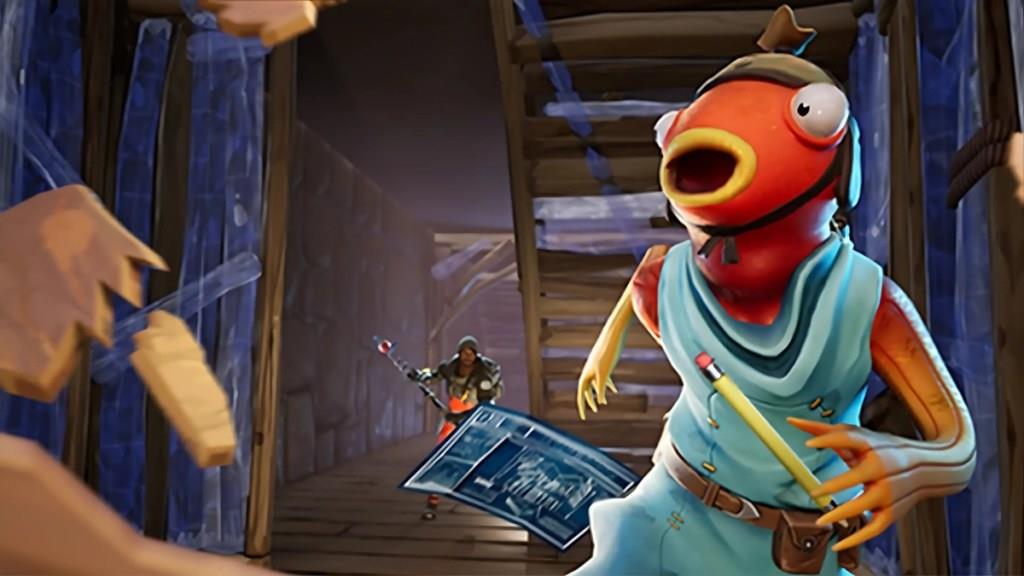
2. Predictability in Build Fights
Small edits can make your building patterns too easy to read, allowing opponents to predict your next move. Reusing the same wall or stair edits during fights can give skilled players an advantage, as they often anticipate where you’ll peek or rotate. Mixing different edits and varying your timing keeps your strategy less obvious, forcing enemies to react instead of plan ahead.
Now, put yourself in a duo match. Assume you’re in a build battle and use Simple Edit to make a regular window edit. Your opponent, who is familiar with Simple Edit’s typical patterns, pre-aims at the window and fires a headshot as soon as the edit is completed. Without Simple Edit, you may have used a less frequent edit (e.g., a half ramp edit) to confuse them.
Simple Edit’s dependence on basic, automatic edit patterns makes your editing predictable, allowing expert opponents to anticipate and counter your movements with greater ease. Turn it off, and you can build ramps or cones to take the high ground and edit them to throw your opponent off guard.
3. Slower Edit Speeds for Sweaty Players
Sweaty players often crank edits at blistering speeds to outpace opponents, but the Simple Edit feature caps that velocity. It forces a uniform pace, slowing down precise adjustments during intense build fights or zero-build skirmishes. This delay lets enemies peek, shoot, or counter before you finish, turning your quick edits into vulnerabilities that cost clutches and eliminations. Stick to manual editing for those high-stakes moments where every millisecond counts.
Imagine yourself in the shoes of a typical Fortnite sweat. In a box fight, you are attempting a triple edit (e.g., wall to window, ramp to half-ramp, floor to cone). Simple Edit’s automatic tile selection slows down your edit chain because you must carefully adjust your aim for each edit.
An opponent employing manual edits outpaces you, causing their wall to fly through before you finish your sequence. The slower edit speed makes you susceptible, allowing your opponent to secure the kill and maybe win the match.
While Simple Edit minimizes inputs for newbies, advanced players who understand manual editing can complete edits more quickly without it. Simple Edit’s automatic selection causes a slight delay as it interprets cursor position, which might slow down rapid edits in competitive play.
4. Incompatibility with High-Stakes Tournaments
High-stakes tournaments demand flawless execution and lightning-fast decision-making, where a single mistake can end a match. The Simple Edit feature, while useful in casual play, can create inconsistencies under tournament pressure. Slight input delays or accidental edits can expose players to opponents during crucial moments. Competitive settings magnify these small errors, making the feature unreliable for those aiming for precise control and consistent builds during intense fights.
SIMPLE EDIT HAS BEEN REMOVED FROM COMP ‼️ pic.twitter.com/1oxrXmrZQf
— HYPEX (@HYPEX) March 12, 2025
Okay, suppose you’ve been training with Simple Edit in public matches and are confident. You’re tunneling, taking boxes, breaking into builds, and defeating enemies. In a Cash Cup, however, Simple Edit is disabled, making it difficult to manually select tiles when under pressure.
During a critical box fight, you make an error with an edit, allowing your opponent to take your wall and defeat you. In tournaments, being unfamiliar with manual editing puts you at a disadvantage, resulting in poor performance and a worse placement.
5. Inability to Hold Edits for Scouting
Holding edits for scouting requires timing and patience, but using simple edits too quickly can expose your position. When players open a window or corner edit just to check their surroundings, they often stay in view longer than expected. Skilled opponents can exploit those gaps with pre-fired shots or peeks. The inability to manage these moments safely turns a defensive advantage into a vulnerability, especially in close-range box fights where visibility and cover matter most.
In Fortnite, pros hold their edits using manual editing to scout through a structure for any enemies nearby. Assume you’re in a late-game circle, turtled inside a 1×1 box. You want to use a cone edit to see if an opponent is pushing from the side.
Simple Edit allows you to fully edit the cone, exposing your position. The opponent fires an AR at your structure, breaking it and eliminating you before you can react. Holding edits allows you to safely peer into structures and analyze enemy positions. Without this, you must commit to full edits, exposing yourself unnecessarily.
How to avoid accidental edits with Simple Edit
Even with Simple Edit enabled, you can still avoid accidental edits by adjusting settings and using good habits. Here’s how to reduce unwanted edits in Fortnite.
1. Use “Hold to Simple Edit” instead of “Tap”
In Settings → Controller/Input → Edit Edits → Edit Mode, choose Hold to Simple Edit instead of Tap to Simple Edit.
-
With Tap, even a quick press of the edit button will instantly create an edit, so bumping the button while moving or jumping can cause a wall or window to pop up randomly.
-
With Hold, you have to press and hold the edit button for a split second, which makes it much harder to accidentally open a hole in your build during normal movement or shooting.
2. Increase your edit lock delay
Go to Edit Settings and set Edit Lock Delay to a higher value (like 0.5-1.0 seconds).
-
This prevents edits from registering immediately when you press the button; you need to hold it for a bit, which stops small bumps or shaky inputs from creating unwanted edits.
-
It also makes it easier to “peek” by holding the edit button only briefly, so you can open a small window without fully committing to a big edit.
3. Practice build reset timing
Learn to reset your edit quickly after placing ramps or walls. With Simple Edit, you still need to press the edit button again to stop the edit preview.
-
If you don’t reset, the edit preview stays active, and any small movement or accidental button press can trigger a new edit on the same piece.
-
Make resetting your edit (a quick tap/press of the edit button) a habit after every build, especially when landing or in a rush.
4. Use edit keybinds carefully
If you’re using multiple edit binds (like double edit bindings), make sure they’re not too sensitive or easy to press by accident.
-
Avoid binding edit to buttons that are near very frequently used ones (like jump, crouch, or aim if on controller).
-
On controller, consider using a less sensitive stick or gyro edit method so small movements don’t trigger Simple Edit too easily.
5. Practice in a Training Map
Jump into a Creative or Training mode map and practice common builds (like 1×1 boxes, triangles, ramps) with Simple Edit turned on.
-
Do drills like: “make a 1×1 box, then open 3 small windows in a row, then reset” until your hands get used to the timing and reset.
-
This helps you feel where the edit preview is and when to release the edit button, so in real matches you edit only when you really want to, no
Turn off Simple Edit in Fortnite settings
To turn off Simple Edit in Fortnite, go into the game’s settings and disable the Simple Edit toggle (it’s in the Building / Edit section, not in a separate menu).
How to disable Simple Edit (all platforms)
-
Open Fortnite and go to the main menu (do not start a match).
-
Press the Settings button (gear icon).
-
Go to the Game tab at the top of the Settings menu.
-
Scroll down and find the Building or Edit section.
-
Look for “Simple Edit” (or “Use Simple Edit”) and set it to Off.
-
(Optional) Also turn off “Tap to Simple Edit” if you want to hold the edit button instead of tapping it.
After turning Simple Edit off, you’ll return to the classic “painting” style where you choose which panels to edit in or out with your mouse or stick.
What happens when Simple Edit is off
-
You can still edit (Q on PC, G on PC to exit edit preview, or the edit button on console).
-
Instead of the game auto-picking a window/triangle, you manually “paint” the tiles you want to remove or change, giving you full control over your edits.
-
Note: Simple Edit is already disabled in competitive modes like Ranked and Arena, so turning it off in normal settings won’t change those modes.