Venti and Istaroth share more than a name-could one soul be guiding both legends across Teyvat’s shifting shadows?
Hoyoverse decided to cast the same voice actors in all languages for Venti and Istaroth. This has never happened before in the history of Genshin Impact, unless the developer wanted to foreshadow something. So, are Venti and Istaroth the same person in Genshin Impact? Here is our theory.
Who Is Istaroth in Genshin Impact?
Istaroth, a figure tied to the wind-god Venti in popular fan theories, is posited by some to be a hidden or alternate identity of the carefree bard. The theory suggests overlapping memories, shared artifacts, and symbolic echoes that blur the lines between Venti’s mortal guise and a possible otherworldly persona, painting Istaroth as a facet or evolution of the same celestial traveler in the world of Genshin Impact.
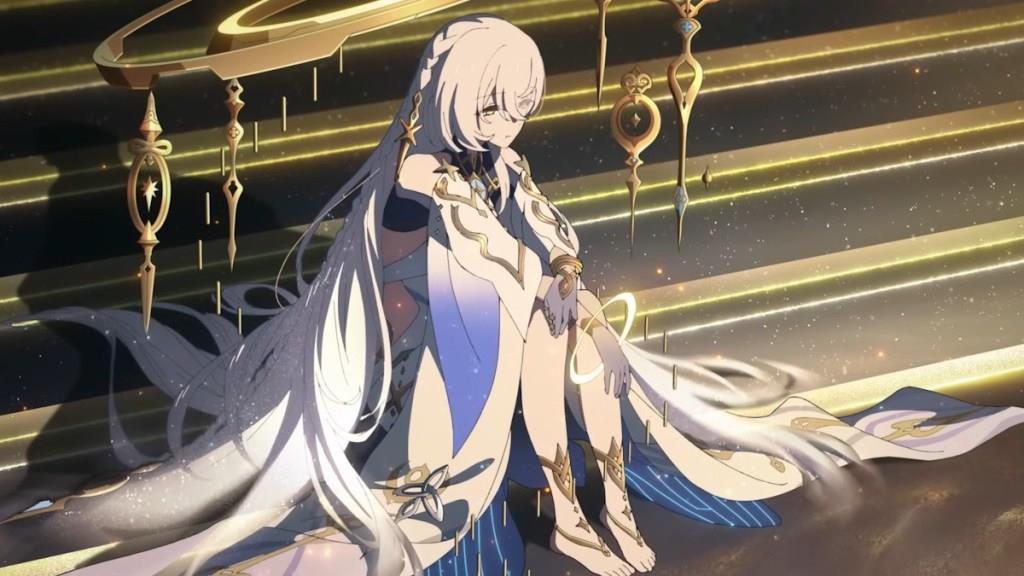
Istaroth is the Ruler of Time, one of the Four Shades in Genshin Impact. She is known by many names, one of which is the ‘Thousand Winds of Time’ or the ‘Undying Wind.’
Istaroth has the power to bestow history to the people, making her one of the most important figures in Teyvat. In Genshin Impact’s lore, we’ve found mentions of Istaroth being worshipped in Mondstadt and Enkanomiya, before and concurrently with the rise of the Seven. But, worshipping Istaroth has more or so been forgotten completely in the current age of Teyvat.
During the ‘A Space and Time for You’ Archon quest, while tackling topics of Khaenri’ah’s revival, we also learned about Istaroth’s involvement during the cataclysm. It was Istaroth who made it possible for Direidyth to travel 500 years into the future and meet the Traveler. This was done so that Direidyth could distract the Traveler’s sibling from Khaenri’ah during the Cataclysm.
Why Istaroth planned to distract the sibling is yet unknown, but it could have been done for either nefarious or a noble reason. I would guess that Istaroth wanted to protect the Traveler from the Curse of Immortality that Ronova forced on the people of Khaenri’ah.
Who is Venti in Genshin Impact?
Venti is a playable Anemo Archon in Genshin Impact, known as the carefree bard who roams Mondstadt. Beneath his playful demeanor lies Barbatos, one of the original Seven who shaped the nation’s freedom-driven spirit. He often hides his divine power behind music and humor, preferring to influence events through songs and stories rather than authority. His youthful appearance and mysterious past have fueled countless fan theories, especially those linking him to ancient beings like Istaroth.

Venti is the Anemo Archon of Teyvat. He acts as a free-spirited bard in Mondstadt who uses his songs to share history. Being the Anemo Archon, he uses the wind with great skill in battle. Venti is also a sort of alias for his original name, Barbatos. People of Mondstadt know the Anemo Archon as Barbatos, so he uses the name Venti to not draw attention to himself.
Barbatos is one of the two original members of The Seven that first ascended during the Archon War. He was simply an elemental wisp among the Thousand Winds without any Divine Power. Due to the worship of the Gunnhildr Clan, Barbatos amassed power and ascended as the Anemo Archon.
Ever since then, the people of Mondstadt have been worshipping Venti and Istaroth at the same time. However, over time, people forgot about Istaroth and confused Venti to be the sole divine being for their worship.
Every Connection Between Venti and Istaroth in Genshin Impact
Genshin Impact lore hints at deep ties between Venti and Istaroth through shared motifs of wind and time. Venti, the Anemo Archon Barbatos, embodies freedom carried on breezes, while Istaroth, the Thousand Winds, governs time’s flow as a Shade of the ancient dragon sovereigns. Both appear in Mondstadt’s ancient songs and ruins, with Venti’s lullabies echoing Istaroth’s domain over fleeting moments. Key scenes, like the dragonspine murals and Enkanomiya records, show wind currents intertwined with hourglass symbols matching Istaroth’s iconography. Venti’s ocarina melodies also mimic time-slowing winds described in lost Demon God texts, suggesting he channels her essence.
Venti and Istaroth have several things in common, and it cannot all be a coincidence. Here is every connection between Venti and Istaroth in Genshin Impact:
- Thousand Winds: Istaroth is known as the ‘Thousand Winds of Time’ while Venti has been mentioned to be a wisp among the ‘Thousand Winds.’ Other than that, Venti is worshipped in the Thousand Winds Temple of Mondstadt, which was likely used for worshipping Istaroth as well as Venti before Istaroth was forgotten.
- Bestower of History: Istaroth can bestow history, as revealed during the God’s Limits teaser. However, how do you bestow history exactly? Historically, that was done through songs, texts, poetry, or art. Now, Venti is a bard who uses his songs to teach about forgotten history.
- Venti’s release trailer: One of the shocking connections comes directly from Venti’s release trailer. It mentions that Venti is born from the ‘Branches of Time’ and is the ‘Witness to the Divine’.
- Same Voice Actors: The biggest connection is that both Venti and Istaroth share the same voice actors for all languages. This has not happened in any other Hoyoverse games without both the person being connected somehow.
Is Venti Actually Istaroth, The Ruler of Time?
A new theory suggests that Venti and Istaroth are the same entity, with Istaroth’s dominion over time reshaping Venti’s wind-born persona into a singular, time-wielding figure. This idea centers on shared motifs, voice echoes, and hidden lore clues that hint at a deeper, interconnected identity beneath Genshin Impact’s vibrant exterior.
Yes, there is a big chance that Venti is a part or avatar of Istaroth, the Ruler of Time. It is likely that Istaroth uses Venti to propagate history among people or help humans while evading the gaze of the Heavenly Principles. There is also a possibility that Venti is not controlled by Istaroth but has his own separate personality.
A part of Istaroth getting divine power and ascending as The Seven is not an unrealistic theory. Both the characters have too much in common for us to simply ignore it as a mere coincidence, and well, having the same voice actors has to be the final nail in the coffin.
What evidence supports Venti being Istaroth in lore
Evidence for Venti being Istaroth is entirely circumstantial and interpretive; nothing in canon explicitly states they are the same being. The strongest points are thematic links, wording in Venti’s lines and character materials, and how “time” and “wind” imagery are paired in key lore.
Direct lore links
-
Venti explicitly describes having met the God of Time in the distant past, implying a real relationship between Barbatos and Istaroth rather than no connection at all. This line is central to theories because it shows they interacted before he became an Archon, which makes later overlap in domains look deliberate rather than random.
-
Canon sources describe Istaroth as the one who “began to write the story of the world,” treating all beings and events as equally worthy of being recorded, which closely parallels Venti’s obsession with stories, songs, and memories of people rather than power or governance.
Shared domains and titles
-
Istaroth is associated with “time,” “moments,” and the Thousand Winds, while Venti is “a single thread of the thousand winds,” an Anemo spirit born from those winds before becoming Barbatos; this shared “thousand winds” motif is a major pillar of the “same being/fragment” theory.
-
Some official and semi-official phrasing (like Venti being “born from the branches of time” in promotional or character-demo style text) is interpreted as suggesting that his origin is literally rooted in Istaroth’s authority, not just thematically linked to it.
Narrative and thematic parallels
-
Venti and Istaroth both function as custodians of stories: she “inscribes” all events, he turns lives and memories into songs, poems, and recorded legends, which theory-crafters read as two aspects of the same narrative function in Teyvat (author/scribe vs bard/storyteller).
-
Both are tied to hope and intervention at key turning points in history: Istaroth aids nations at pivotal crises, while Venti appears during revolutions and disasters (Decarabian, Durin, Mare Jivari), sometimes in ways that involve manipulating time-like concepts such as erasing a region from the normal flow (“blew it off the timeline”).
Metafictional and symbolic clues
-
Fans point to chessboard and cosmology imagery where Venti’s piece and Istaroth/Phanes-related symbolism are placed in ways that suggest shared or nested divinity, leading to layered theories such as “Venti is Istaroth’s avatar” or “Venti is a shard/echo of Istaroth” rather than a 1:1 identity.
-
Community analyses often argue that the consistency of these overlaps across regions (Mondstadt, Inazuma, Mare Jivari references) makes it less likely to be coincidence and more likely to be deliberate foreshadowing that their identities or authorities are intertwined in a deeper, unrevealed way.
How strong is this as “evidence”?
-
In strict lore terms, all of this supports a close connection (mentor-chosen, fragment, avatar, or shared authority), not a confirmed “Venti = Istaroth” identity; every hard source currently preserves a distinction between “Venti/Barbatos” and “Istaroth” as separate n
What is the bootstrap paradox with Venti and Istaroth
The bootstrap paradox in Genshin Impact lore theories posits a causal loop where Venti and Istaroth’s identities or powers originate from each other without a clear beginning, mirroring classic time-travel paradoxes like an object or information passed back in time with no original source. Fans apply this to suggest Istaroth (God of Time) grants Venti fragments of her authority in the ancient past, enabling feats like blowing the Mare Jivari “off the timeline,” yet Venti’s wind essence and storytelling role seem to predate or birth aspects of Istaroth’s domain, creating a self-sustaining cycle.
Core Paradox Elements
-
Time’s self-creation: Istaroth “writes the story of the world” and aids pivotal events (e.g., Sacred Sakura), but Venti claims a chance encounter where she entrusts him power “after hearing his wishes”-implying his pre-existing will influences her actions, looping back as if time (Istaroth) births its own catalyst (Venti).
-
Shared origins in Thousand Winds: Venti emerges as “a single thread of the thousand winds,” a title tied to Istaroth, suggesting he fragments from her yet empowers her interventions, with no linear “first cause”.
-
Non-coexistence timeline: They never appear together; when Venti “sleeps” (inactive), Istaroth acts (e.g., Khaenri’ah era), and vice versa, fueling ideas of split personalities or awakening cycles within one entity.
Theory Implications
This paradox frames them as a unified being (avatar, echo, or shade fragment) opposing Heavenly Principles, where Venti/Istaroth rewrites history to aid Travelers, birthing their own existence in a loop. No canon confirms it, but voice actor overlap and lore phrasing (e.g., Venti’s time references) amplify speculation.
