Shadows cloak ancient secrets in Genshin Impact’s Moonlit Ballad of the Night trailer, where a haunting melody reveals hidden lore beneath the moon’s glow.
Here is a complete Genshin Impact ‘Moonlit Ballad of the Night’ teaser trailer breakdown, so that you don’t miss out on any of the small details.
If you are here for information on the upcoming characters, then simply head to our Nod-Krai character list. This post focuses primarily on the lore hints revealed in the teaser.
1. Nod-Krai’s Secret is Connected to Mondstadt
Nod-Krai’s hidden truth links directly to Mondstadt through subtle visual cues in the trailer. A faint insignia on the shadowed figure matches the Knights of Favonius emblem, hinting at ancient ties between the two regions. Faded murals in the background depict a shared history of rebellion against celestial forces, with Mondstadt’s windmills stylized amid Nod-Krai’s craggy peaks. This connection suggests the event’s core mystery spans continents, pulling familiar characters into unforeseen alliances.
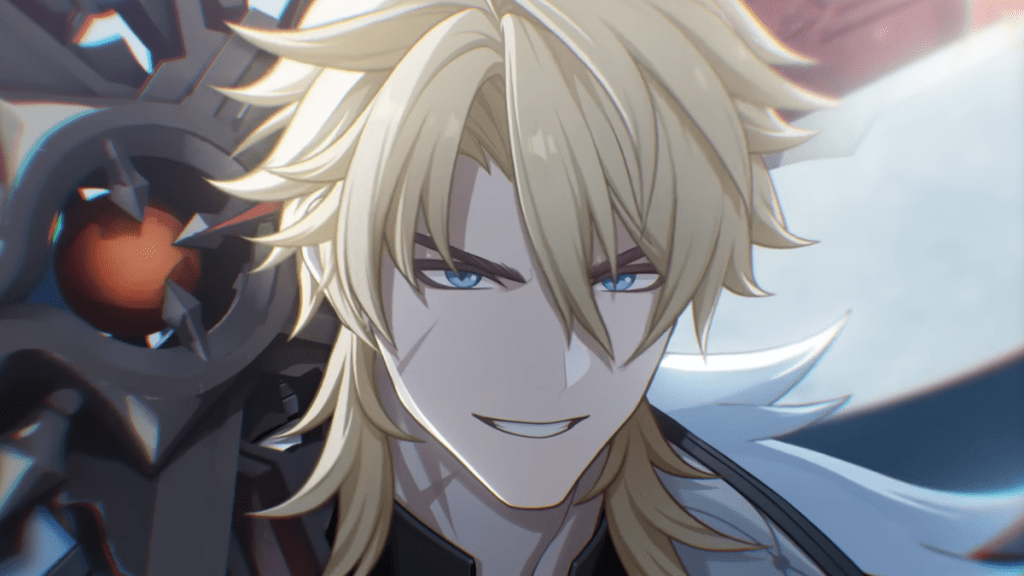
Varka is one of the main highlights of the Moonlit Ballad of the Night teaser trailer. No one in the community expected to witness Varka’s face reveal so early. However, my interest lies somewhere else with Varka, i.e. his purpose in Nod-Krai. Thankfully, we get a slight hint about it in the teaser. When Nefer asks about his purpose, Varka replies that “I came here for the moon (Mondstadt)”.
When Varka mentions that he is here for the moon, the English subtitles include Mondstadt in brackets next to the word Moon. Now we know that Mondstadt literally translates to the moon city, but it might not be just wordplay. There is likely a connection between the Moon goddess or powers of Nod-Krai with Mondstadt, which itself is known to have existed since before the Seven.
2. Primordial Being
The Primordial Being stands as Teyvat’s original architect, a cosmic entity predating the Archons and Celestia. Visions from the Moonlit Ballad trailer portray faint silhouettes amid starry voids, hinting at its role in forging the world’s elemental laws before the cataclysm shattered its influence. Subtle motifs of fractured masks and glowing fissures suggest lingering fragments tied to the night’s celestial veil, positioning it as the unseen force behind the ball’s ethereal summons.
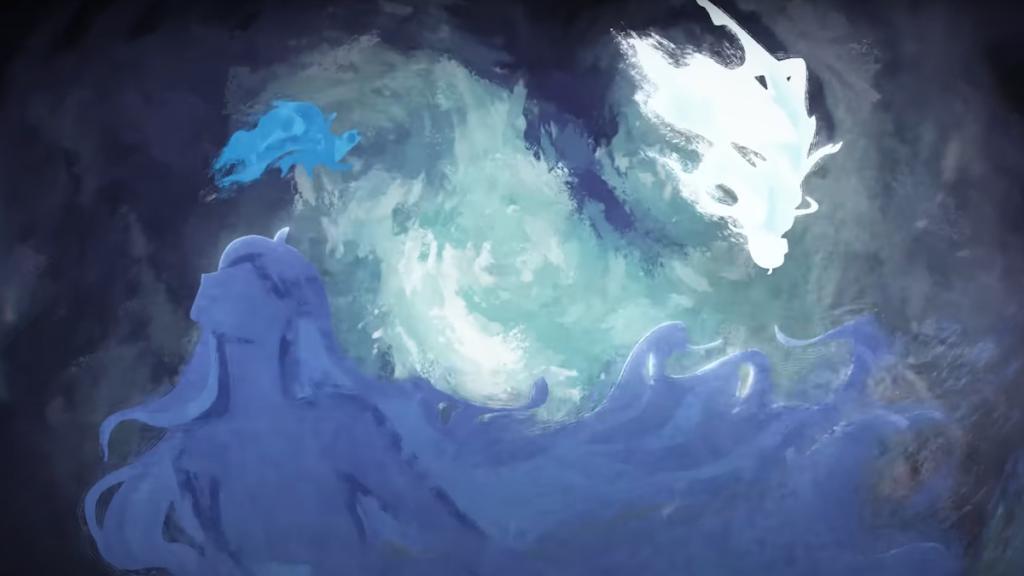
One of the more interesting lore drops in the teaser was the story of an era before the Descendants arrived on Teyvat. Whether this was during the time of the Seven Dragon Sovereigns or even before that is unclear. According to Nefer’s story, that era had no boundary of life and death, and willpower flowed freely among countless beings. Then, Nefer talks about the ‘Primordial Being’ that ruled the planet.
The Primordial Being that once ruled this planet, made three moons rise from the Earth…It was not until the Funerary Year that the primordial voice once again cried out in the darkness.
We’ve seen mentions of the Primordial One, who is referred to as the Heavenly Principles and the creator of Teyvat in Genshin Impact. However, whether the Primordial Being and the Primordial One refer to the same person is yet to be revealed.
Leaving the identity aside, it seems that the Primordial Being created the three moons, which are collectively known as the three sisters- the Iridescent Moon, Eternal Moon, and Frost Moon.
According to the lore, we know that two of the three sisters have died and the corpse of one of these sisters continues to illuminate the sky. The story of Nod-Krai will likely be around the third sister, or Frost Moon.
3. The Rebellion of the Frostmoon Scions
The Frostmoon Scions rise against the ancient order that once bound their lineage, their rebellion etched in icy defiance and broken vows. The trailer frames their struggle through moonlit battles and silent oaths, revealing how their heritage of frost becomes both weapon and burden. Fragments of dialogue hint at fractured loyalties and a queen whose control over winter falters as the night deepens, marking the beginning of a conflict that promises to reshape Teyvat’s balance under the silver glow of the Frostmoon.
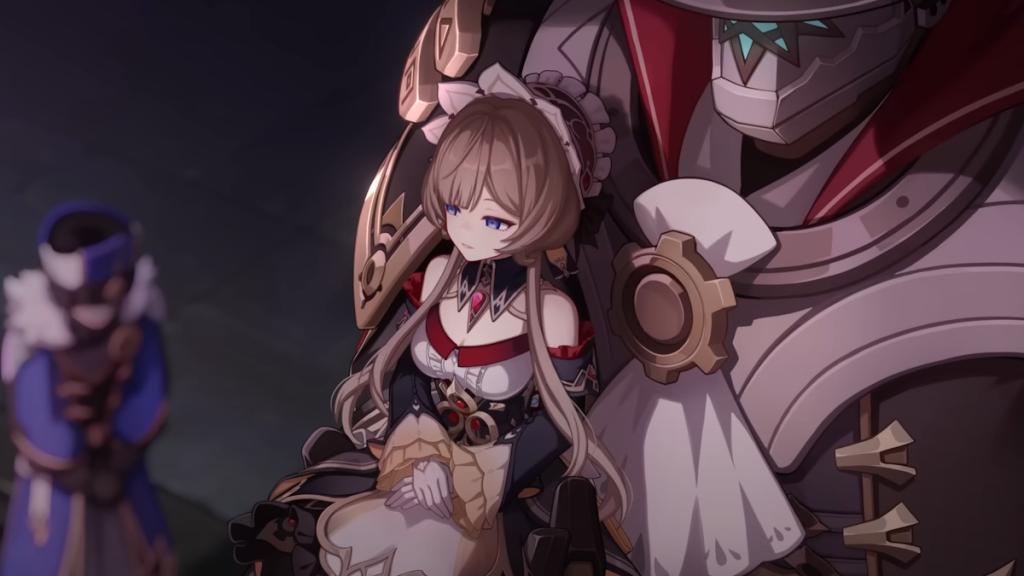
The Genshin Impact Archon quest cannot be without the Fatui butting their nose into everything, and that’s exactly what we can expect to happen in Nod-Krai as well. During the brief appearance of Sandrone, she mentions that the Frostmoon Scions have rebelled.
This means that the rebel is against Snezhnaya or the Tsaritsa. With Columbina appearing as the ‘Moon Maiden’, and not as a Fatui Harbinger, she can be the one who is rebelling against the Fatui.
4. Ancient Shadow
The trailer’s “Ancient Shadow” segment hints at forgotten powers stirring beneath the moonlit skies, tying modern conflicts to long-lost civilizations. Glimpses of crumbling ruins, obscure symbols, and spectral figures suggest an awakening force shaped by regret and memory. This section deepens the mythic tone of the video, hinting that the new storyline will unravel truths buried beneath history’s silence-where ancient wills may yet influence the present.
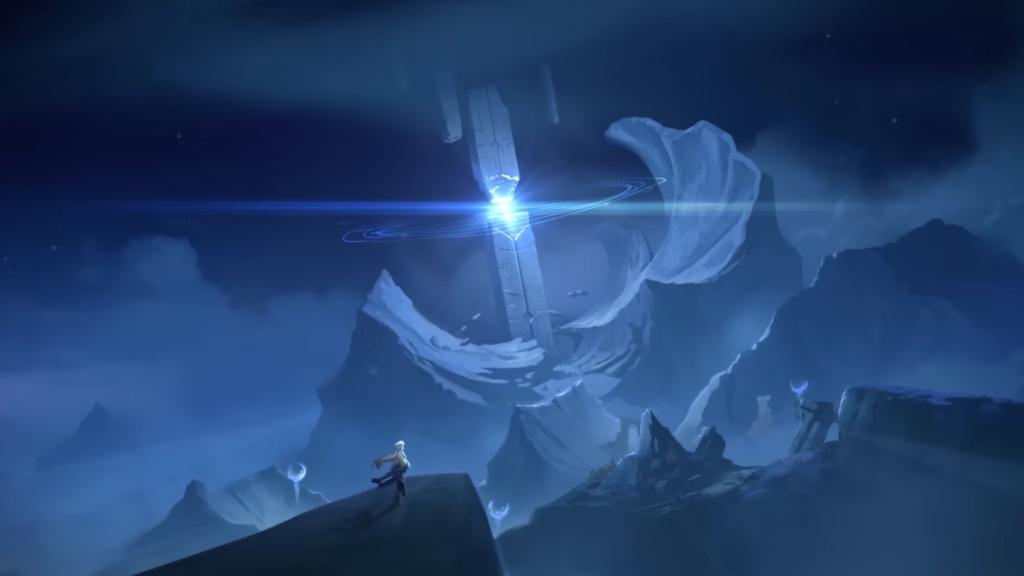
During the teaser, we get a brief look at Nicole Reeyn, who mentions that beyond the Moonlight’s reach, an Ancient Shadow is brandishing its claws aimed at the stars.The ‘Ancient Shadow’ is likely the Wild Hunt, which also appears to be connected to the Abyss. Here, the stars can only be Celestia and the Heavenly Principles. So, is this a hint that what lurks in the hidden depths of Nod-Krai can be used to collapse Celestia? We can only wait and see!
5. The Veil of Lies is Slipping
The trailer hints that long-kept truths are beginning to surface as illusions fracture around the main cast. Faces once trusted reveal unease, suggesting hidden motives beneath careful smiles. Glimpses of masked figures, shifting reflections, and fragmentary dialogue allude to secrets breaking free from control. The tone darkens with each shot, implying that the glamour of celebration is giving way to the raw truth beneath the spectacle.
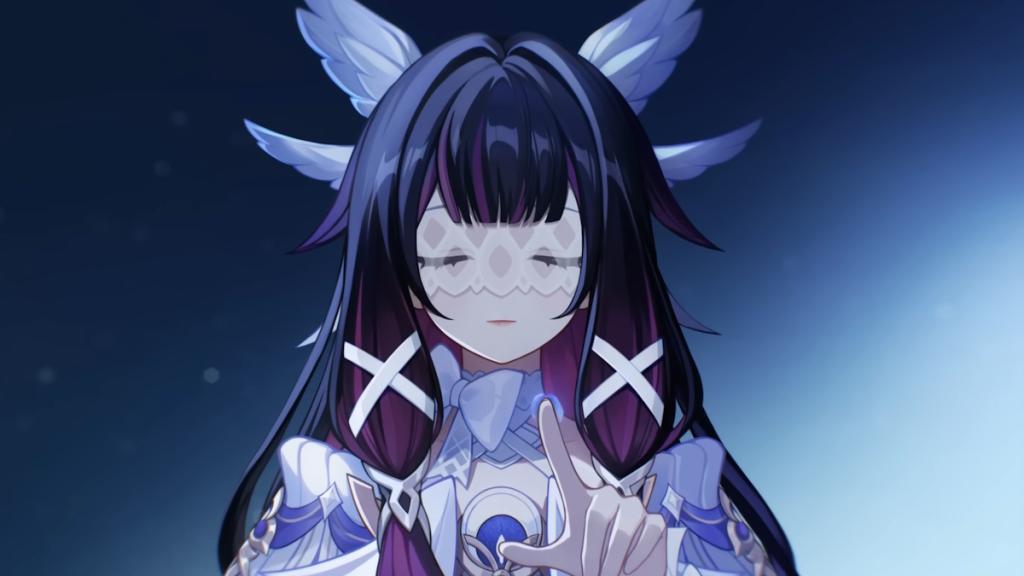
The biggest highlight of the teaser was Columbina’s appearance. With the title of the ‘Moon Maiden’, she was shown artistically side by side with one of the moons of Teyvat. Interestingly, Columbina almost speaks a prophecy that, when you take a closer look, may have big story significance.
In the water, the future mirrors the past, the veil of lies is slipping, the moon’s fall is nigh.
The ‘Veil of Lies’ interested me the most. This can only refer to the lies about Teyvat from the False Sky to the constellations. We already know that Heavenly Principles hide the true identity of Teyvat, and that might be what is slowly slipping.
Next, Columbina mentions that the Moon’s fall is near. This also hints that the ‘Lies of Teyvat’ may be connected to the moon. With the fall of the moon, we may finally understand the true nature of Teyvat.
6. Silver Blood
“Silver Blood” draws attention to the mysterious figure whose lineage seems tied to ancient lunar powers hinted throughout the trailer’s imagery. The silvery glow coursing through their veins symbolizes both divine heritage and a burden passed through generations. The visual cues-cold light, mirrored reflections, and shifting sigils-suggest conflict between purity and corruption, as if the character’s strength demands a terrible price. This motif reinforces the trailer’s theme of identity shaped by legacy and sacrifice under the moon’s quiet gaze.
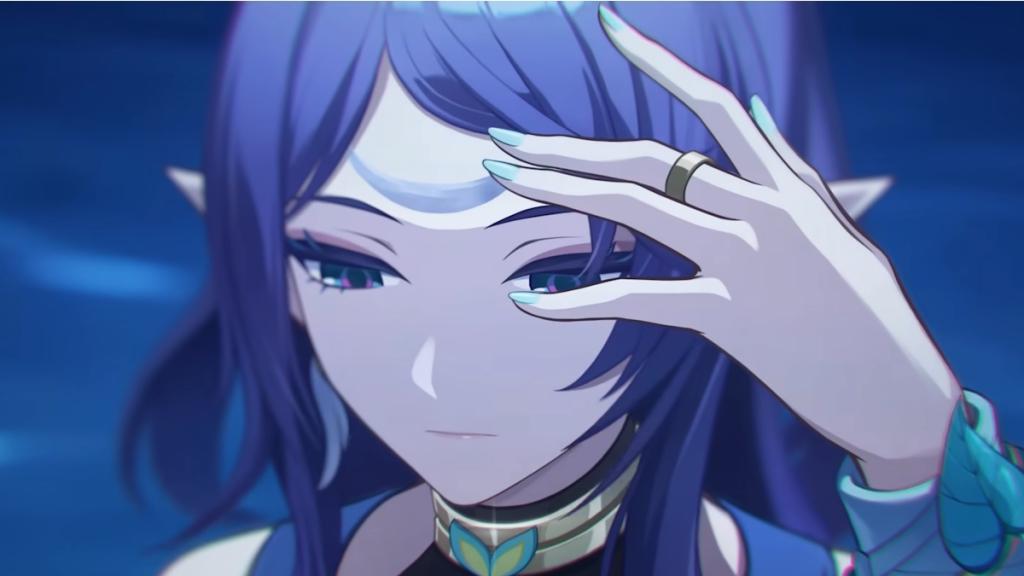
The Moonlit Ballad of the Night Genshin Impact trailer put a ton of emphasis on Lauma, one of the new characters of Nod-Krai. She is shown to beseech the ‘Pale White Frostmoon,’ and perform a unique ritual. During this ritual, she cuts her hand with a dagger and then uses the blood to draw a crescent moon on her forehead. Interestingly, we see that her blood is silver in color and not red.
Whether this is a common trend for all Frostmoon Scions or is only specific to Lauma is not known yet. However, once the blood drips into the water, we see it turning into the tendrils of the Wild Hunt. Although it is likely done for cinematic aesthetics, there is a possibility that the Wild Hunt is tied to the Lunar power unique to Nod-Krai.
7. The Wild Hunt is Looking for a Person
The trailer hints at the Wild Hunt’s pursuit of a mysterious individual whose identity remains concealed. Their presence stirs unease among the gathered nobles, suggesting that this person holds a power or secret tied to the moonlit phenomena. Fragmented imagery-a fleeting silhouette under silver light, whispers carried by the wind-implies that this chase is not just physical but deeply tied to fate and prophecy within the story’s unfolding lore.
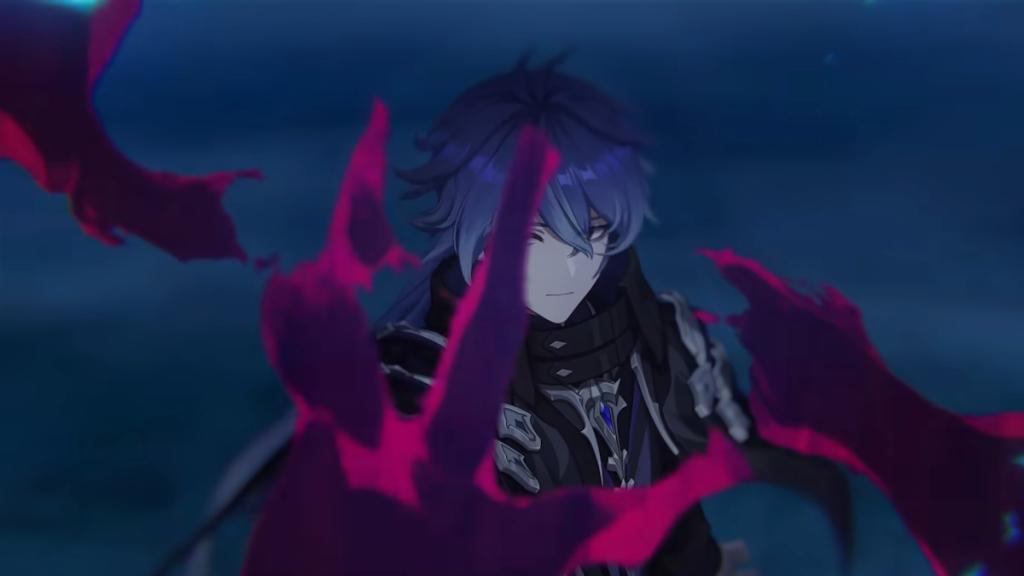
Speaking of the Wild Hunt, we unfortunately only get a brief peek at it in the trailer. However, what interested me the most is that the Wild Hunt almost appeared as hands trying to grab something.
When it attacks Flinn, one of the Lightkeepers revealed to be in Nod-Krai, we witness an interesting interaction with. Flinn addresses the Wild Hunt and says that it has the ‘wrong person’ before dissipating it. This might be a hint that the Wild Hunt is searching for a specific person, maybe the Moon Maiden herself?
8. Wanderer’s Old Score
The Wanderer confronts a figure from his past, hinting at unresolved grudges tied to his Fatui days. Subtle animations reveal suppressed fury in his expressions, while shadowed flashbacks depict betrayal amid icy Inazuma winds. This moment ties his arc to the event’s veiled schemes, suggesting old debts fuel the night’s chaos.
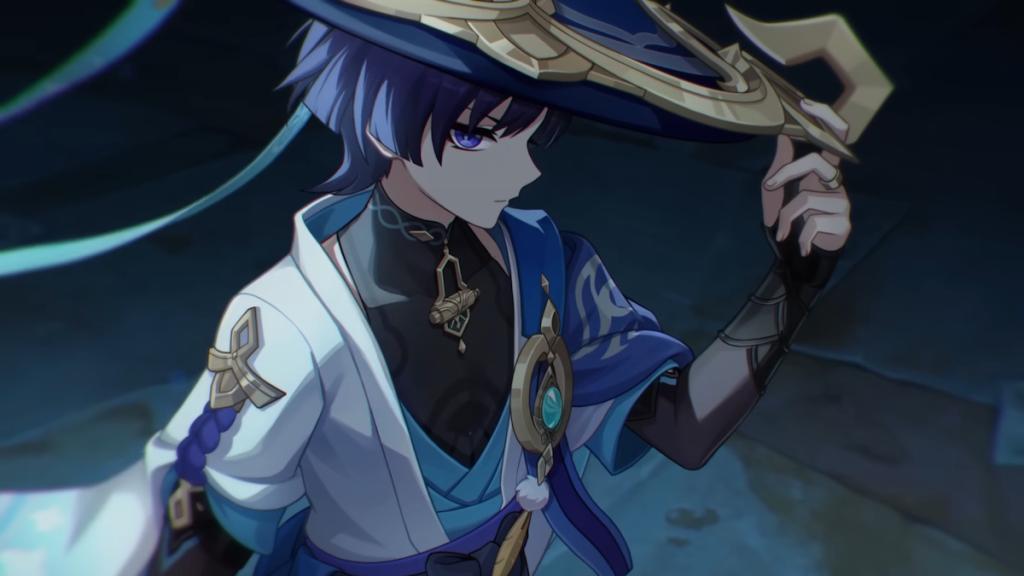
At the end, we see the Wanderer appear in the Nod-Krai teaser. Before deciding to part ways, the ex-Fatui Harbinger was with Alice and Albedo. While going away, Wanderer mentions that he has an old score to settle in Nod-Krai.
From what we know of the Wanderer, he seems to be talking about ‘The Doctor’ here, the second-ranked Fatui Harbinger. He is well known for his cruel past involving countless victims, including Scaramouche, who becomes the Wanderer. This also means that The Doctor is active in Nod-Krai, even though he did not appear in the teaser.
Who is the Primordial Being in the trailer
The Primordial Being in Genshin Impact’s “Moonlit Ballad of the Night” trailer refers to an ancient entity that once ruled the planet and created three moons rising from the Earth before the Funerary Year. This figure is distinct from the established Primordial One (also known as Phanes or the Heavenly Principles), who descended from beyond the stars and reshaped Teyvat in conflict with the Dragon Sovereigns. Fan theories suggest it could be tied to Nibelung, the Dragon King, as a creator or rival force in primordial lore.
Trailer Context
The trailer’s legend depicts this being’s moons destroyed by jealous dragons, leaving shattered remnants that mirror Teyvat’s false sky and hidden truths, as echoed in weapons like Ineffa’s Fractured Halo and Moonpiercer. It positions the entity as a pre-Celestia ruler, possibly from the Light Realm or an earlier era, contrasting the Primordial One’s heavenly dominion.
Theories and Identity Debate
Speculation links it to Nibelung due to dragon origins and moon creation motifs, or as a progenitor predating Phanes’ arrival. Others propose it’s a collective primordial force, not a single named god, foreshadowing Nod-Krai’s conflicts with celestial and abyssal threats. No official confirmation names it explicitly beyond “Primordial Being,” leaving room for Archon Quest reveals.
What is the connection between Primordial One and Heavenly Principles
The Primordial One and the Heavenly Principles are closely linked in Genshin Impact lore, with the former widely regarded as the entity embodying or establishing the latter. The Primordial One, also called Phanes or the First Descender, arrived from beyond the stars, defeated the Dragon Sovereigns, and reshaped Teyvat into its current form, creating humanity and the Human Realm while ruling from Celestia.
Core Identity
Official sources equate the two: the Heavenly Principles are described as the Primordial One, governing Teyvat through “laws” enforced by its Four Shades, including the Sustainer of Heavenly Principles (likely the Unknown God). This god usurped the original world, imposed celestial order, and created the Gnoses to maintain control, punishing rebellions like Khaenri’ah.
Debates and Theories
Fan discussions debate if they are identical or distinct-the Primordial One as “creator” versus Heavenly Principles as a “system” or successor (e.g., the Second Who Came). Evidence like Dainsleif’s lines and Neuvillette’s story suggests the throne is “reserved,” implying the Primordial One’s absence, with Heavenly Principles as its delegated authority or altered form. No canonical separation is confirmed, tying both to Celestia’s tyranny.