Hidden among Minecraft’s desert sands blooms a rare cactus flower-an elusive plant with surprising uses, from crafting pink dye to enhancing your garden’s look. Here’s how to find it, harvest it safely, and make the most of its unique charm.
So, without further ado, let’s dive right in and talk about the Cactus Flower in Minecraft and everything about it!
Note: This feature is currently in its beta testing phase and is playable only in Minecraft Snapshot 25W06A. We will update this page as soon as Mojang releases a stable version.
How to Get Cactus Flowers in Minecraft
Plants in Minecraft grow cactus flowers by harvesting decorative cacti and using dye to color items, then combining them with other blocks and items in the crafting grid to obtain pink dye and related flower cosmetics.
The Cactus Flowers can be found in these four biomes of Minecraft. These are Deserts, Badlands, Eroded Badlands, and Wooded Badlands. You will find this flower block wherever the Cactus plant grows. The flower will grow on top of the Cactuses, and its spawn rate will increase with the plant’s height.
If a Cactus is one or two blocks high, the flowers will have a 10% chance of spawning if the plant doesn’t grow any further. Similarly, if the Cactus is three blocks high, the flowers will have a 25% chance of spawning. Moreover, the flowers will appear only when there are no blocks on any of its four sides.
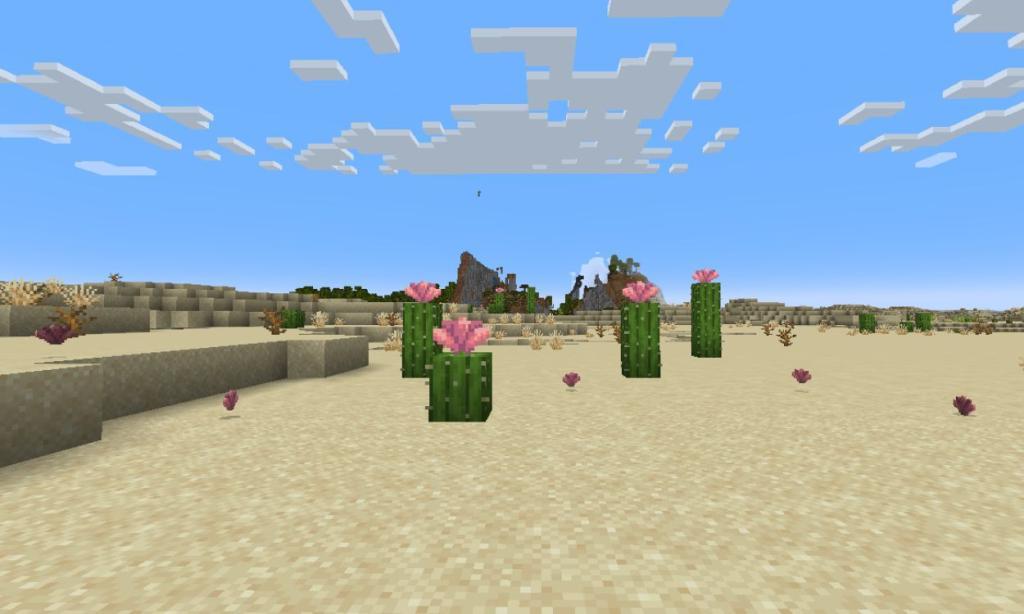
Just like any other flower in Minecraft, you can pick them up by simply breaking them with your hand or any other tool. These flowers will drop when you break the cactus blocks as well. This way, you can use a piston, an observer, and some building blocks to make an automated Cactus flower farm. However, you cannot use bone meal on these flowers to reproduce them.
Also Read: Minecraft Wildflowers: How to Get, Uses and More
Once you get some Cactus flowers, you can place them on any block with center support. This can include building blocks, copper rods, end rods, anvils, vases, etc.
Minecraft Cactus Flowers Uses
Cactus flowers can be used to craft pink dye in Minecraft, expanding color options for banners, glass, and wool. They also serve as a decorative item in flower beds and can be traded with villagers for emeralds.
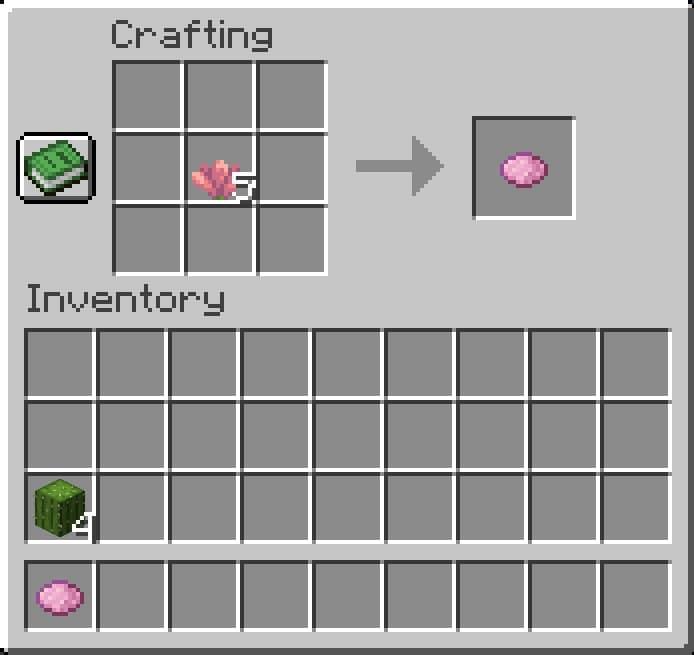
One of the prime uses of Cactus flowers is making Minecraft dyes. Like all Minecraft flowers, placing a Cactus flower on a crafting table will give you a pink dye.
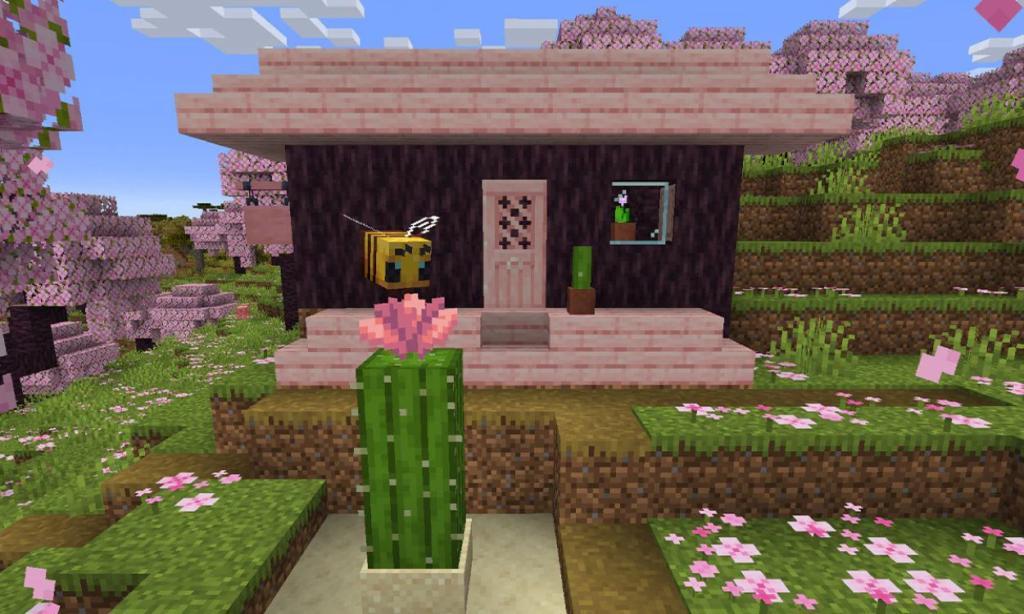
Placing such flowers near your base will add a pop of color to your surroundings. You may also use the Cactus flowers to attract bees and breed them. Bees can try pollinating with the Cactus flowers. However, they can get harmed once they get close to the prickly cactuses. Lastly, feeding a Cactus flower to a baby bee can speed up its growth.
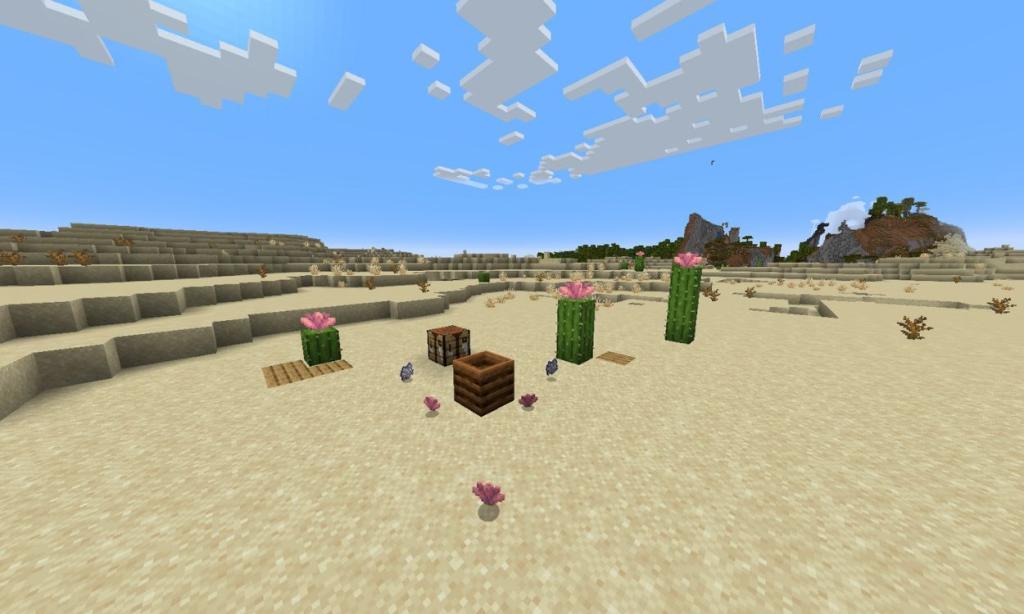
The final use of Cactus flowers is throwing them into the Minecraft composter. When you throw a flower in it, there will be a 30% chance to fill up one layer of the composter. This way, you can get approximately 2-3 bone meals from a full stack of Cactus flowers.
How to build an automatic cactus flower farm
Automatic cactus flower farms in Minecraft rely on growing tall cacti in deserts or badlands, then using observers and pistons to harvest flowers without destroying the cactus base. These designs work in Java and Bedrock editions post-1.21.5 update, producing flowers for dyes, composting, or bee food.
Simple Single-Module Design
Build a compact 6×5 area starting with a double chest and four hoppers in a cross pattern feeding into it. Place sand in the center with three stacked cacti, top with an upside-down observer facing a note block, and add redstone stairs leading to a repeater (3 ticks), sticky piston, and normal piston. Enclose with glass walls to contain drops; expand by chaining modules side-by-side.
Multi-Layer Piston Farm
Create a grid of sand every other block on slabs, with water streams pushing items to central hoppers. Install cacti on sand, observers watching tops, and sticky pistons one block below to break flowers when they bloom (every 5-10 minutes on tall cacti). Use slime blocks or redstone clocks for timing; stack layers vertically for higher yields.
Materials Overview
| Component | Basic Farm (1 Layer) | Advanced Multi-Layer |
|---|---|---|
| Sand/Cactus | 44 each | 100+ each |
| Pistons/Observers | 5-10 | 20+ sticky |
| Redstone/Repeater | 10-20 dust | Hopper clock + torches |
| Collection | 4-7 hoppers/chests | Water streams to center |
Yields scale with size-small farms give 100+ flowers/hour; large ones thousands. Test in creative; ensure no adjacent blocks block flower growth.
Best materials list for an automated cactus flower farm
Automated cactus flower farms in Minecraft prioritize efficiency, scalability, and minimal lag, with materials varying by design size (single module vs. multi-layer). Compact designs suit early-game needs, while layered farms maximize yields using slime blocks or observers for reliable flower harvesting from tall cacti.
Compact Module (1-3 Cacti)
Ideal for starters, covering a 6×5 area with high flower drop rates per cactus.
-
3 cactus, 1 sand
-
5 hoppers, 2 chests
-
2 observers, 1 sticky piston, 1 piston, 1 repeater
-
7 redstone dust, 67 blocks (any solid), 24 glass, 1 note block, 1 slab
Layered Farm (Per 44 Cacti Layer)
Scales vertically for thousands of flowers/hour; Bedrock/Java compatible using moss/slime redstone clocks.
-
44 cactus, 44 sand
-
20 sticky pistons, 4 observers
-
10 redstone torches, 4 redstone dust, 49 moss (or leaves/glazed terracotta)
-
44 slime blocks, 25 walls, 6 blocks
Base (all layers): 4 chests, 4 hoppers, 8 repeaters, 6 comparators, 25 redstone, 1 redstone block, 4-5 stacks filler items (for clock).
Optimized Multi-Layer (113 Cacti)
High-end design with hopper carts for lossless collection.
| Category | Quantity | Notes |
|---|---|---|
| Structural | 113 sand, 113 cactus, 123 blocks, 9 leaves | Sand supports cacti; leaves for aesthetics |
| Redstone/Mechanics | 4 sticky pistons, 1 piston, 3 observers, 6 comparators, 1 repeater, 5 redstone dust, 1 redstone block | Powers flower breaks every 5-10 min |
| Collection | 5 chests, 7 hoppers, 5 hopper carts | Central drop system |
| Misc | 4 bulbs, 1 trapdoor, 1 furnace, 7 honey, 1 lever | Hopper clock tuning |
Stack layers up to build height limits for best output; use thin-hitbox breakers like fences to avoid item loss.