Minecraft’s eyeblossoms bloom only under moonlight, turning night into a glowing spectacle that hides secrets in their petals.
If you haven’t already experienced these new and unique flowers, then this one’s for you. After going through them ourselves, these are the coolest things we found about the Eyeblossoms in Minecraft.
1. Eyeblossoms React to Day-Night Cycle
Eyeblossoms open their vivid petals at dawn, glowing softly as sunlight hits them, then close tightly by dusk to shield from mobs. Players notice this shift during Minecraft’s day-night cycle, where the flowers pulse faintly in darkness, hinting at hidden growth mechanics. Plant them near bases to track time without clocks, adding a natural rhythm to survival worlds.
The Eyeblossoms come in two variants – Open and Closed. If you visit the Pale Garden during the day, you will find the petals of these flowers closed, standing upright, and looking gray in color.
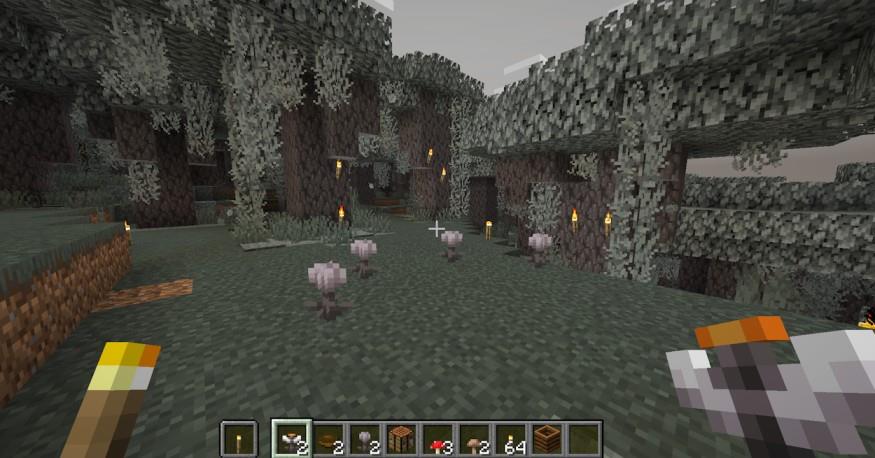
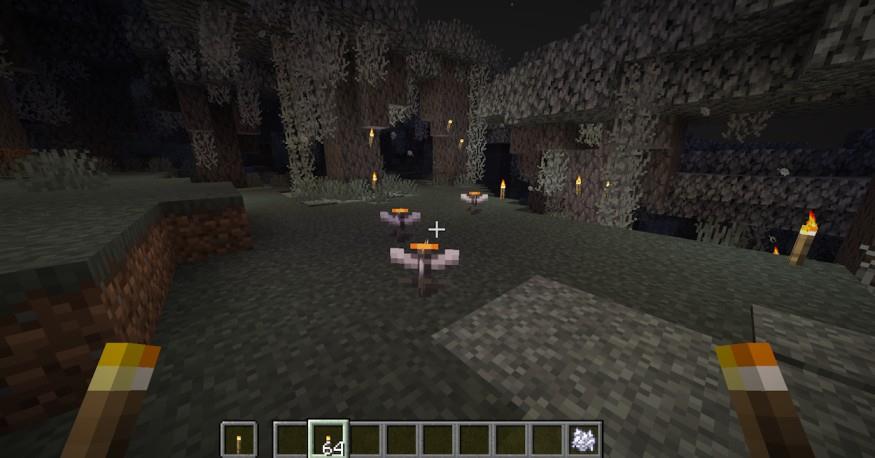
Whereas as soon as night falls, the flower will bloom and a glowing orange eye will appear in the middle. This is the open Eyeblossom and blooming during the night. The eye in the middle might look like a glowing orange ball, however, this flower doesn’t emit any light. Besides when you see it, there’s no denying that Eyeblossoms look super appealing to see and also kind of scary.
2. Craft Suspicious Stews
Eyeblossom flowers add a twist to suspicious stews by infusing them with effects tied to the day-night cycle. Place an eyeblossom in a crafting table alongside a bowl of mushroom stew and a matching flower from another biome. Brew during daylight for speed boosts that last until dusk, or at night for slow-falling that mimics moonlight gliding. Stack multiple eyeblossoms to layer effects, creating brews with surprise outcomes perfect for PvP or exploration. Test batches near a light source to control the timing and potency.
Both the varieties of the flowers produce two different kinds of stews. If you use the Open Eyeblossom, you will get a suspicious stew that gives a Blindness effect, while using the Closed one will give you a Nausea effect.
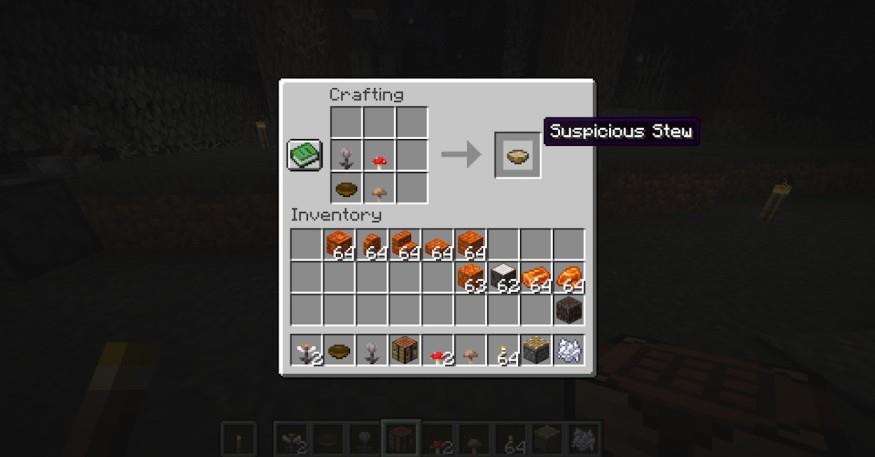
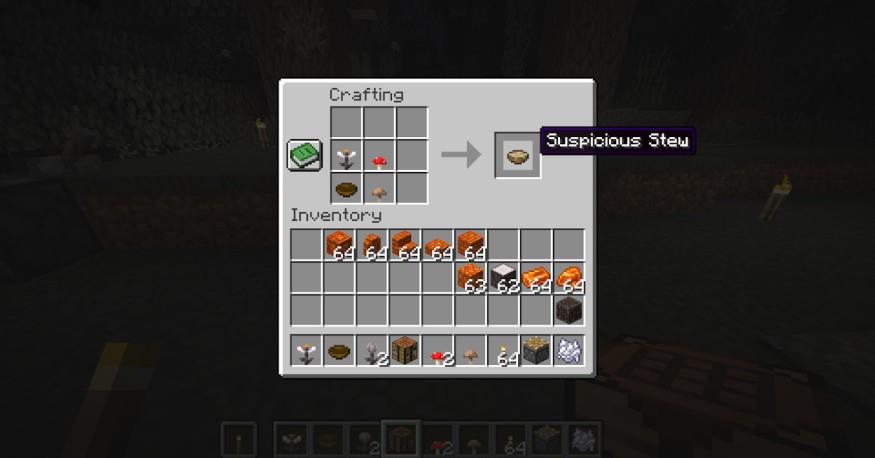
To make these stews, open up your crafting table and place a bowl at the leftmost bottom corner. Place a brown mushroom to the right of this bowl and a red one above it. Finally, place either of the flower variants just above the bowl to fill the 4×4 square and you have it.
3. Craft Colorful Dyes
Eyeblossoms can be brewed into a range of colorful dyes that shift slightly depending on the time of day they’re gathered. Picking flowers during daylight gives brighter hues, while nighttime versions produce deeper shades with a faint glow. These dyes can be used on wool, glass, or armor trims, adding a dynamic touch to your builds and outfits that reflects the world’s day-night rhythm.
Another cool fact is that you make a couple of dyes with both the open and closed versions of this flower. Placing the open Eyeblossom in the crafting table will produce an Orange dye. Whereas using the closed one will give you a Gray dye.
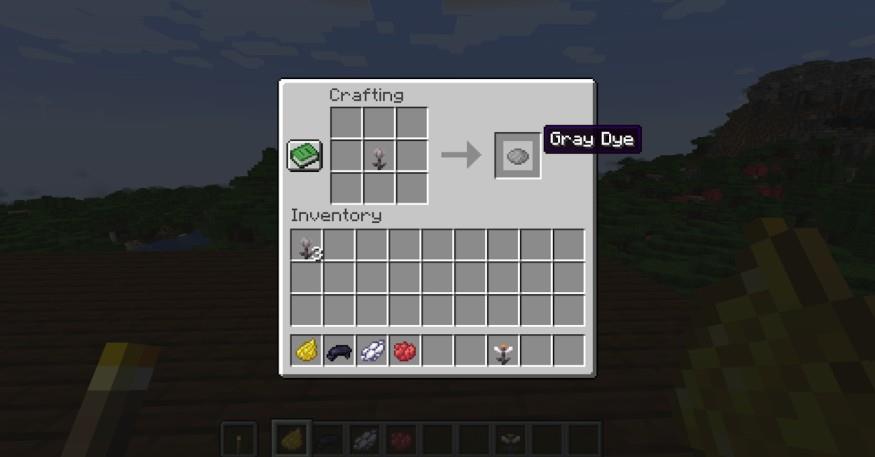
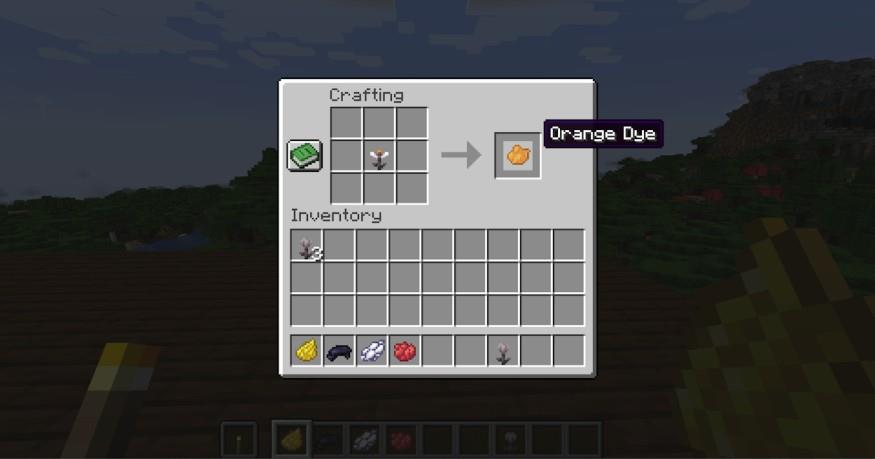
Now, you can use them to color your favorite sheep, give a unique colored collar to your pets, add banner patterns, dye blocks, give your signboards a new color, and many more. Furthermore, you may get the orange and gray dye in your Minecraft world by mixing yellow and red (for orange) or black and white (for gray).
4. Eyeblossoms Can Talk to Each Other!
Eyeblossoms communicate silently across distances in Minecraft. During the day, they stay closed and quiet, but at night, their petals open to release faint pollen signals. These signals let nearby eyeblossoms share information about nearby threats or ideal growth spots. Players notice clusters blooming or wilting together, hinting at this hidden network tied to the day-night cycle. Watch a field of them at dusk to see the effect in action.
You might have noticed that if a few Eyeblossoms within a 3-block radius exist, they will interact with each other. Consider using a bone meal on the grass in the Pale Garden to generate a few Eyeblossoms close to each other. Otherwise, pick these flowers from different regions and place them close to one another.
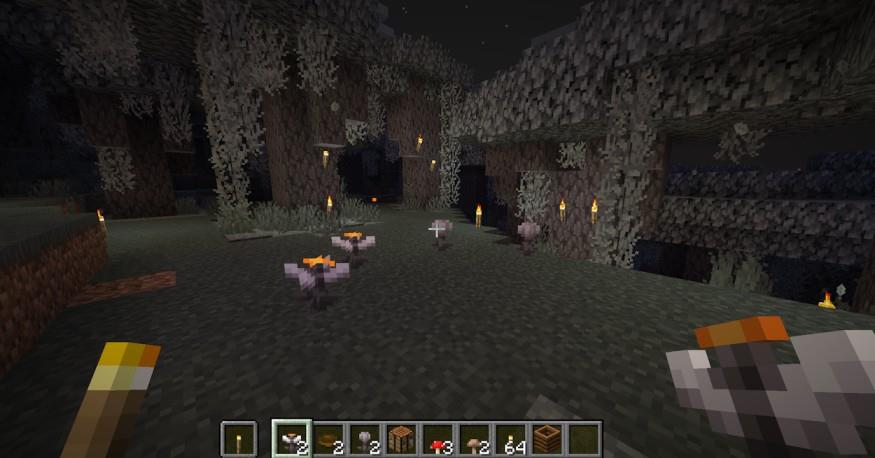
Simply keep observing the flowers that are really close to each other during dusk or dawn. You will notice that the moment one of the flowers notices the change in the environment, it will communicate the same to the others within its range using orange particles.
This way, if one of the flowers blooms as soon as night falls, the others will do the same thing simultaneously, as if they have formed a network. The exact opposite phenomenon occurs at dawn when the flowers close their petals as the sun goes up.
5. Bees React Differently to Eyeblossoms
Bees react differently to Eyeblossoms than they do to other flowers, showing selective foraging based on the flower’s hue, scent, and nectar timing. Some blooms attract more pollinators during the day, while others draw fewer insects at night, shaping how players plan farming and navigation around the day-night cycle.
Since no mobs spawn in the Pale Garden, you need to take the Eyeblossoms to a place where you can find bees. Now, placing an open Eyeblossom flower in the plains or in the meadows where there are bees nearby will do a new and unique trick. However, this trick only applies during the night since the bees don’t come near closed Eyeblossoms.
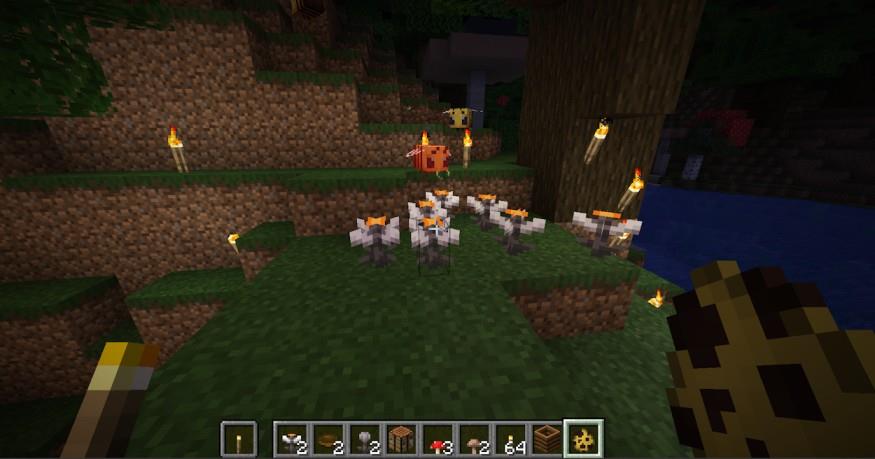
Once a bee gets attracted to and interacts with the flower, it will get poisoned. This effect will stay for 1.25 seconds, causing the bees to emit swirly green particles. Although the bees get poisoned, they can pollinate these open flowers. But, you may not breed the bees using the Eyeblossoms.
How to farm eyeblossoms efficiently in the Pale Garden
Eyeblossoms in Minecraft’s Pale Garden biome can be farmed efficiently by leveraging bone meal on grass or dirt blocks within the biome. This method scales well for automated setups and works in both Java and Bedrock editions.
Locate the Biome
Travel to a Pale Garden, identifiable by pale oak trees and creaking mobs, where eyeblossoms naturally spawn on grass during day (closed, gray) or night (open, orange).
Manual Bone Meal Farming
-
Place a single eyeblossom on grass, dirt, moss, or similar blocks.
-
Apply bone meal repeatedly to generate more nearby; success isn’t guaranteed per use but compounds with persistence.
-
Harvest at desired states: day for closed (gray dye) or night for open (orange dye).
Automated Dispenser Farm
Build in the Pale Garden using dispensers loaded with bone meal aimed at grass blocks in a flower farm design. This produces both closed and open eyeblossoms plus seeds, yielding around 21 closed and 152 open per stack of bone meal on average.
Tips for Efficiency
Switch to day/night cycles via beds or commands to harvest specific states quickly. Avoid creaking mobs by farming in lit areas; replant potted versions elsewhere for dyes without biome travel.
Best layout for a compact eyeblossom farm in 1.21.4
Compact eyeblossom farms in Minecraft 1.21.4 rely on dispensers firing bone meal at grass blocks within the Pale Garden biome, producing both closed (daytime) and open (nighttime) variants alongside seeds.
Simple Dispenser Design
Build a 9×9 layer of grass blocks elevated one space above the ground. Place dispensers directly underneath each grass block, all powered by a single redstone clock or button. Load dispensers with bone meal; each activation has a chance to spawn eyeblossoms.
Collection Layer
Beneath the dispensers, add hoppers feeding into a central chest to catch dropped flowers and seeds automatically. Surround the setup with water streams if needed to funnel items, keeping the footprint under 11×11 blocks total.
Optimization Tips
-
Activate during both day and night cycles by sleeping to skip time, maximizing yields (averages 21 closed, 152 open per bone meal stack).
-
Use observers facing eyeblossoms for a redstone signal on state changes to automate collection phases.
-
Light up the area to prevent creaking mob interference while farming.
